Stand in any toy aisle and count the boxes that say brain development. Stacking cups promise it. Busy boards promise it. A plastic drum promises it. The phrase is doing a lot of work, and most of it is marketing.
Here is the version without a box: a two-year-old brain builds itself out of repetition, movement, and above all response. Things happen because the child did something, and someone noticed.
What actually earns the label
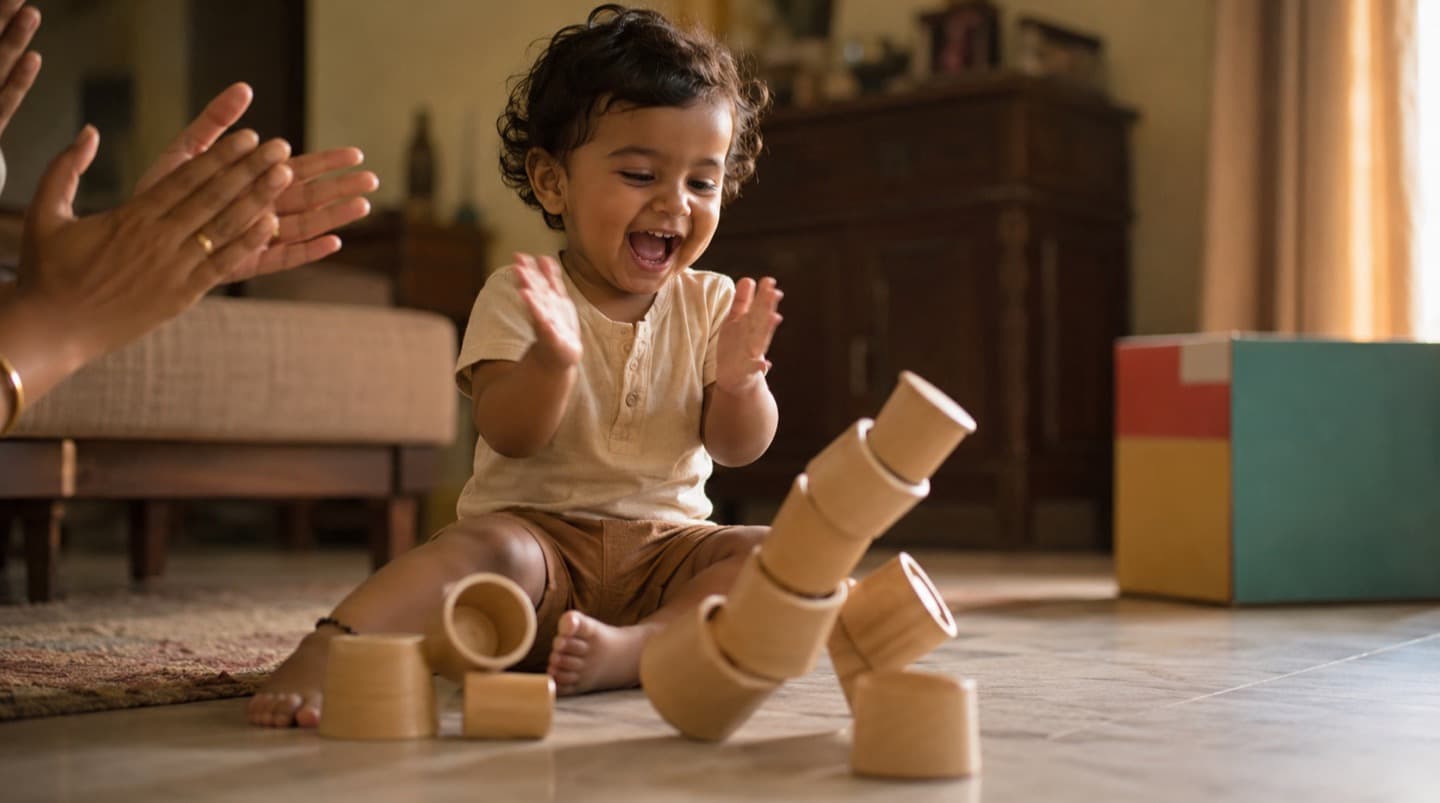
Simple open toys do: blocks, cups, things that stack, pour, and fit inside each other. They earn it not because they are clever but because the child must be. A toy that does one loud thing when a button is pressed teaches the button. A toy that can become ten things teaches the child.
The ingredient no box lists
The strongest finding in early development is that brains grow through serve and return, the loop where a child acts or asks and a person responds. No object on the shelf outranks a person on the floor. The same cups are twice the toy when someone counts the stack, asks which is biggest, and cheers the crash.
So the honest shopping rule for a two-year-old: fewer toys that perform, more toys that wait for the child to act. Check the safety mark, skip the promises, and spend the difference on time on the carpet.
Where does a talking toy fit that rule? Only if it responds rather than performs. A toy that answers a question and asks one back is doing the serve and return job. A toy that sings at the ceiling is furniture with batteries.
That is the bar we hold Kheelu to: it listens, answers, remembers, and moves at your child's pace, with no screen anywhere. If a friend on the carpet sounds better than another performing box, pre-orders are open.

More reads like this on the journal, the mechanisms behind the promises on the Safety page, or meet the friend behind it on the Kheelu page.