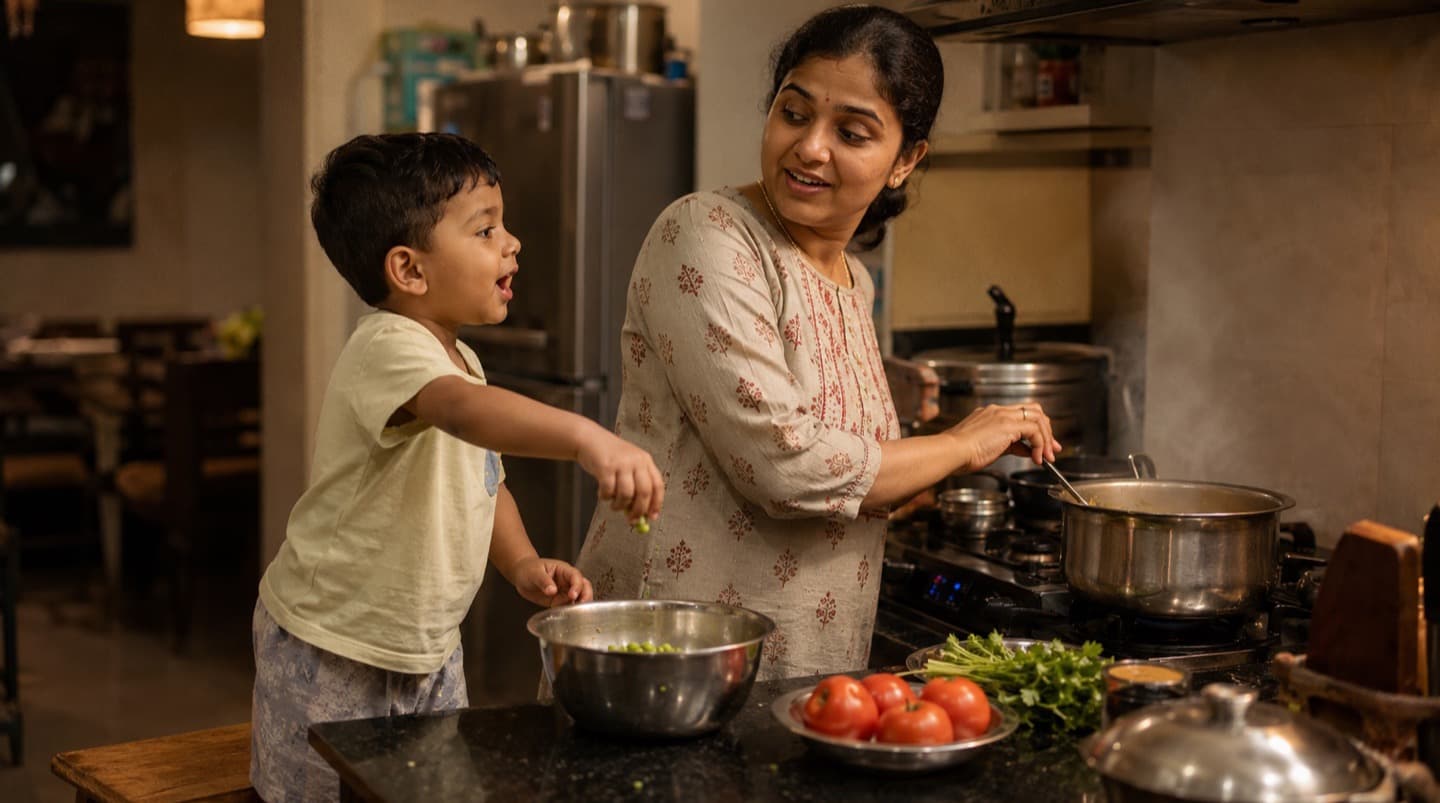
Type how to make my child's brain sharp into any search box and an industry answers: apps, flashcards, tonics, courses for three year olds. The volume of it can make an ordinary home feel like not enough.
Here is the comforting, slightly boring truth. The things that build a young brain are old things. Research keeps circling the same four.
Conversation, sleep, play, and calm
Conversation, especially the back and forth kind, builds language and thinking at once; researchers count conversational turns, not vocabulary drills. Sleep is when the day's learning gets filed, and children aged 3 to 6 need ten to thirteen hours of it. Play, the unstructured kind where the sofa becomes a ship, is where planning, memory, and self-control get their reps. And a calm, warm home is not a luxury: chronic stress is one of the few things reliably shown to work against a growing brain.
Notice what is not on the list. There is no app on it. Educational toys and brain development toys can help, but only the ones that produce more of the four: a toy that starts a conversation earns its place, a toy that performs at your child does not.
The dinner-table test
A useful filter for anything sold as brain-building: after ten minutes with it, does your child have something to say? Blocks pass the test. A good story passes. A cartoon marathon mostly fails. Judge our talking toy with the same test, and judge everything else with it too.
The families doing this best are not buying more. They are talking more, sleeping on time, leaving room for nonsense games, and keeping the volume of the house low. Sharp grows in that soil.

More reads like this on the journal, the mechanisms behind the promises on the Safety page, or meet the friend behind it on the Kheelu page.