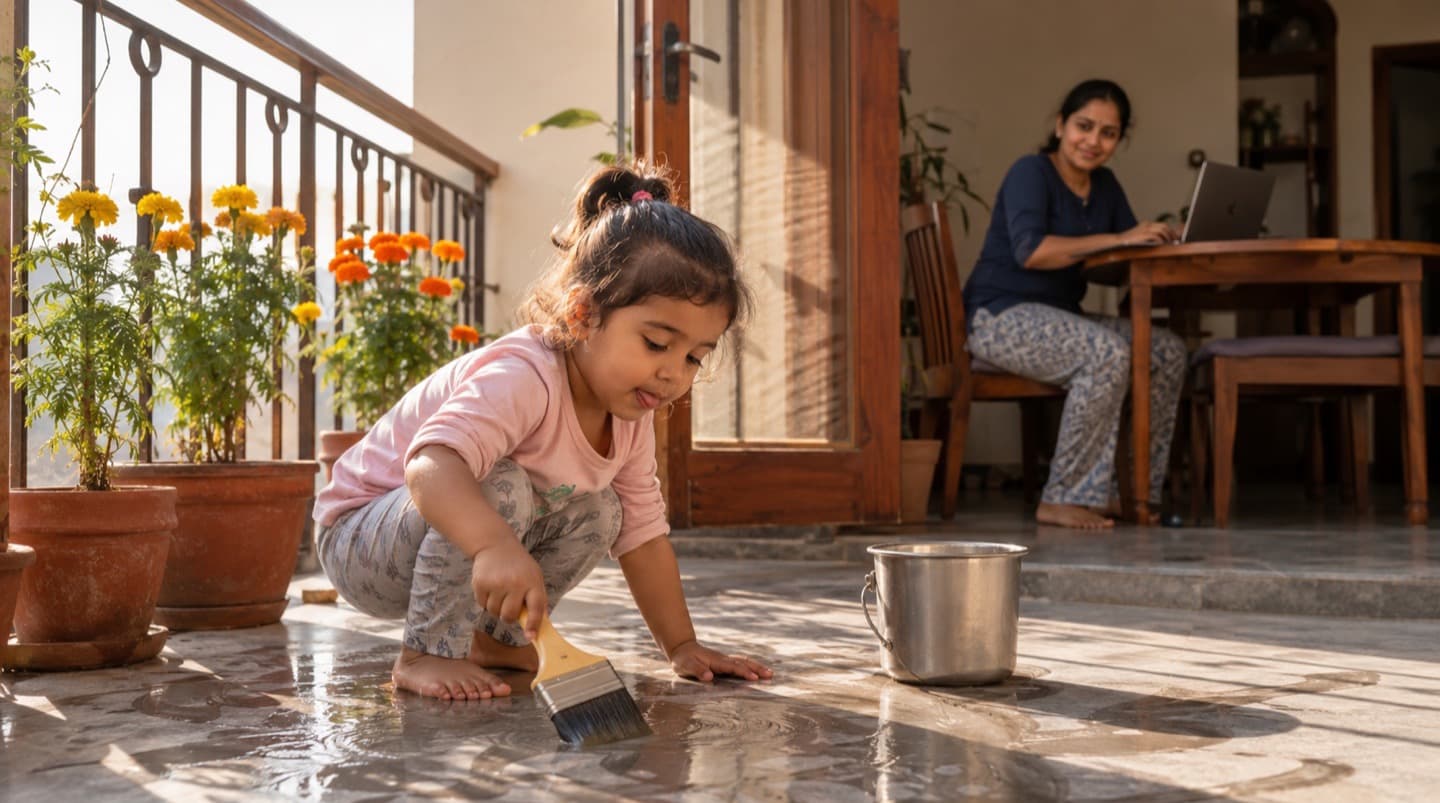
It is 4pm, your call starts in ten minutes, and a small person is orbiting your desk asking what they can do. The tablet would solve this in four seconds. That is exactly why it feels like cheating.
The screen-free answer is not one magic activity. It is understanding what the screen was providing: a task with no setup, no adult, and no way to fail. Anything with those three properties can compete.
The ten-second setups
Keep a shelf of things that start instantly and end wherever: a bucket of water and a paintbrush to paint the balcony floor, a dabba of rajma to sort by wrinkles, old newspaper to tear into the world's largest salad, a blanket over two chairs that is a house until dinner. The humbler the material, the longer it lasts. Expensive toys have one script. A cardboard box has forty.
Jobs beat games
The secret weapon of small children is that they do not yet know work is work. Being asked to match all the socks, wash the potatoes, or guard the dough while it rises is not a chore to a four year old. It is a promotion. Real jobs hold attention longer than invented games because children can smell the difference.
And for the stretches where you truly cannot be interrupted, line up company that talks: story audio in your language, a grandparent on speaker, a voice that asks questions back. Busy hands last longest when there is a voice keeping the mind company too. Building that voice is our whole project, but the shelf and the socks need no technology at all.
The house does not need to become a preschool. It needs six reliable boredom exits. Build the shelf once, and 4pm gets easier for a year.

More reads like this on the journal, the mechanisms behind the promises on the Safety page, or meet the friend behind it on the Kheelu page.