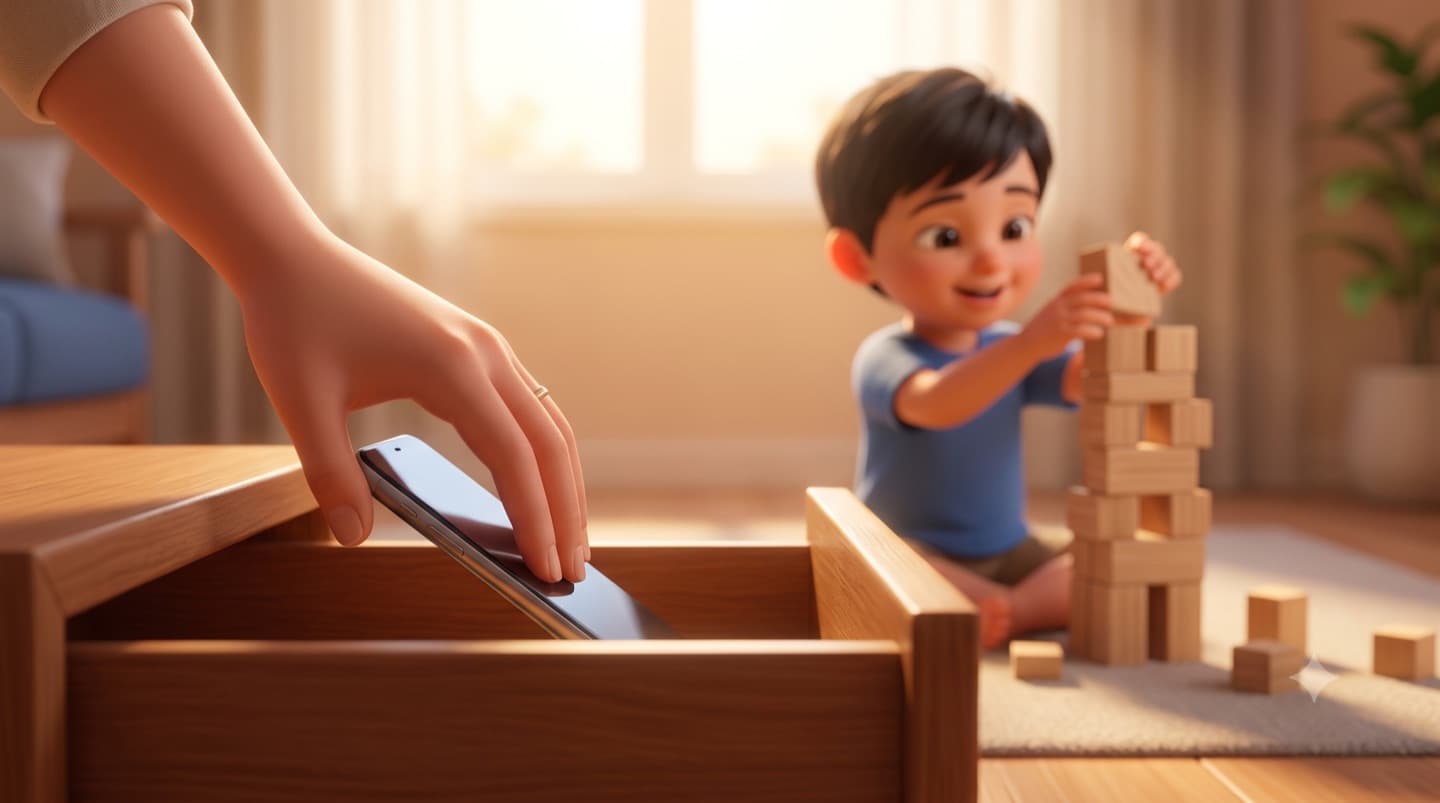
Nobody plans for their four year old to know exactly where the YouTube app lives. It happens one busy evening at a time, and then one day the phone is the first thing they ask for and the last thing they give up.
Going cold turkey usually fails, because the phone was solving real problems: your meeting, their boredom, the queue at the clinic. Take it away without replacing what it did and the house pays. So here is a week that replaces before it removes.
Days one and two: just watch
Change nothing yet. Notice when the phone appears. Morning rush? The cooking hour? The car? Each slot is a problem the phone got hired to solve. Write them down. You will usually find two or three, not ten.
Days three and four: replace the easiest slot
Pick the slot where the stakes are lowest and put something in it that talks or moves: audio stories in your language, a cousin on a voice call, a puzzle you started together at breakfast so it is waiting for them. Keep the hard slots untouched. One win matters more than three fights.
Days five and six: shrink, do not snatch
In the remaining slots, end the screen at natural breaks and land it somewhere: a job, a snack, a who-can-spot-a-crow contest at the window. The plan from our tantrums article applies here on repeat.
Day seven: make the new normal visible
Tell your child what changed, in their language: mornings are for songs now, the car is for spotting autos. Children accept rules they can predict far better than moods they cannot.
Expect a wobbly week two, and expect it to pass. What stays is the discovery underneath: most of what the phone was providing was a voice paying attention. Provide that, from anyone or anything that genuinely listens, and the phone loses its main job.

More reads like this on the journal, the mechanisms behind the promises on the Safety page, or meet the friend behind it on the Kheelu page.