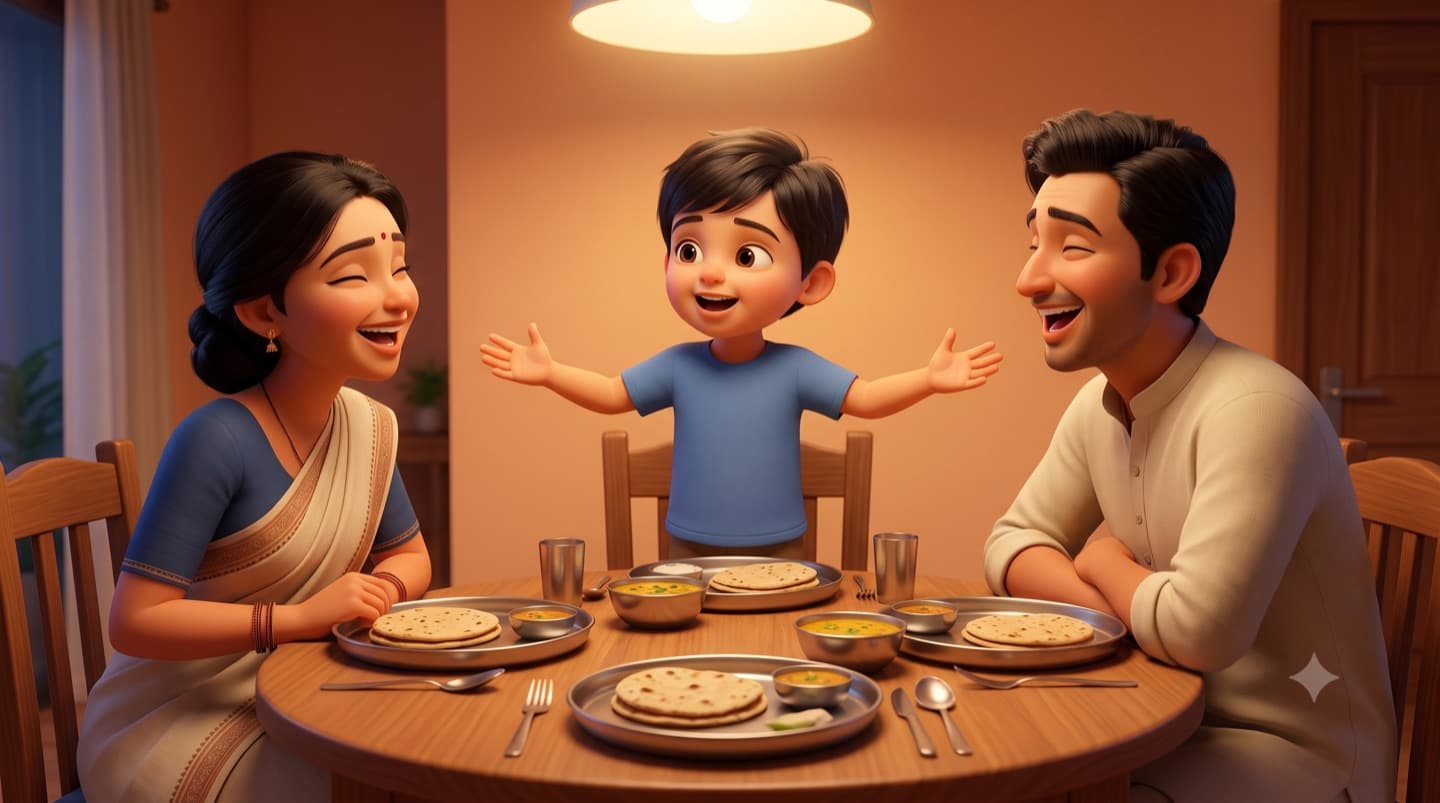
How was school? Fine. What did you do? Nothing. Two questions in, the conversation is over, and the child who narrated every ant on the footpath at age three has become a vault at five.
The vault is rarely about you. Broad questions are genuinely hard to answer. A whole day is too big to summarize, so children reach for the smallest true word they have. Fine.
Ask smaller, get bigger
Swap the summary question for a specific one. Who made someone laugh today? What was the worst thing on your plate at lunch? If your classroom had a door to anywhere, where did it go today? Specific questions are easier to enter and more fun to answer, and one good answer usually brings friends.
Two more habits do quiet magic. Answer the question yourself first: the worst thing on my plate was the office canteen dal, and here is why. Children join conversations more easily than they start them. And leave gaps. A count of five feels like an hour, but the gap is where children decide to fill.
The follow-up is the whole game
Whatever comes back, chase it one step. Not with a quiz, with curiosity. He fell off the bench? What did the teacher do? Then what did you do? The follow-up tells your child that their answer went somewhere, and answers that go somewhere get longer.
This serve and return pattern is the same mechanism researchers keep finding at the center of language growth. We wrote about the science of it in another piece. The kitchen version is simpler: ask small, answer first, wait long, follow up.
And on the evenings you cannot be the asker, any patient voice helps keep the muscle warm. That is the job we gave Kheelu: ask, listen, ask again. The dinner table stays yours.

More reads like this on the journal, the mechanisms behind the promises on the Safety page, or meet the friend behind it on the Kheelu page.