Somewhere at every birthday party there is a parent doing quiet math: that child is narrating a whole movie, mine points and says come. Is this fine? Is this something?
First, the honest frame. Children spread themselves across a wide normal range, late talkers often catch up completely, and quiet is a temperament as well as a milestone. Also true: some children need help, earlier help works better, and a parent's gut feeling is real information.
When to ask a professional
This article is not a diagnosis, and no article is. As a general guide, talk to your pediatrician or a speech-language professional if your child says very few words by two and a half, is hard for family to understand at three, loses words they used to have at any age, or seems not to understand simple things you say. If your gut says ask, ask. The worst case of asking early is reassurance.
What helps at home, either way
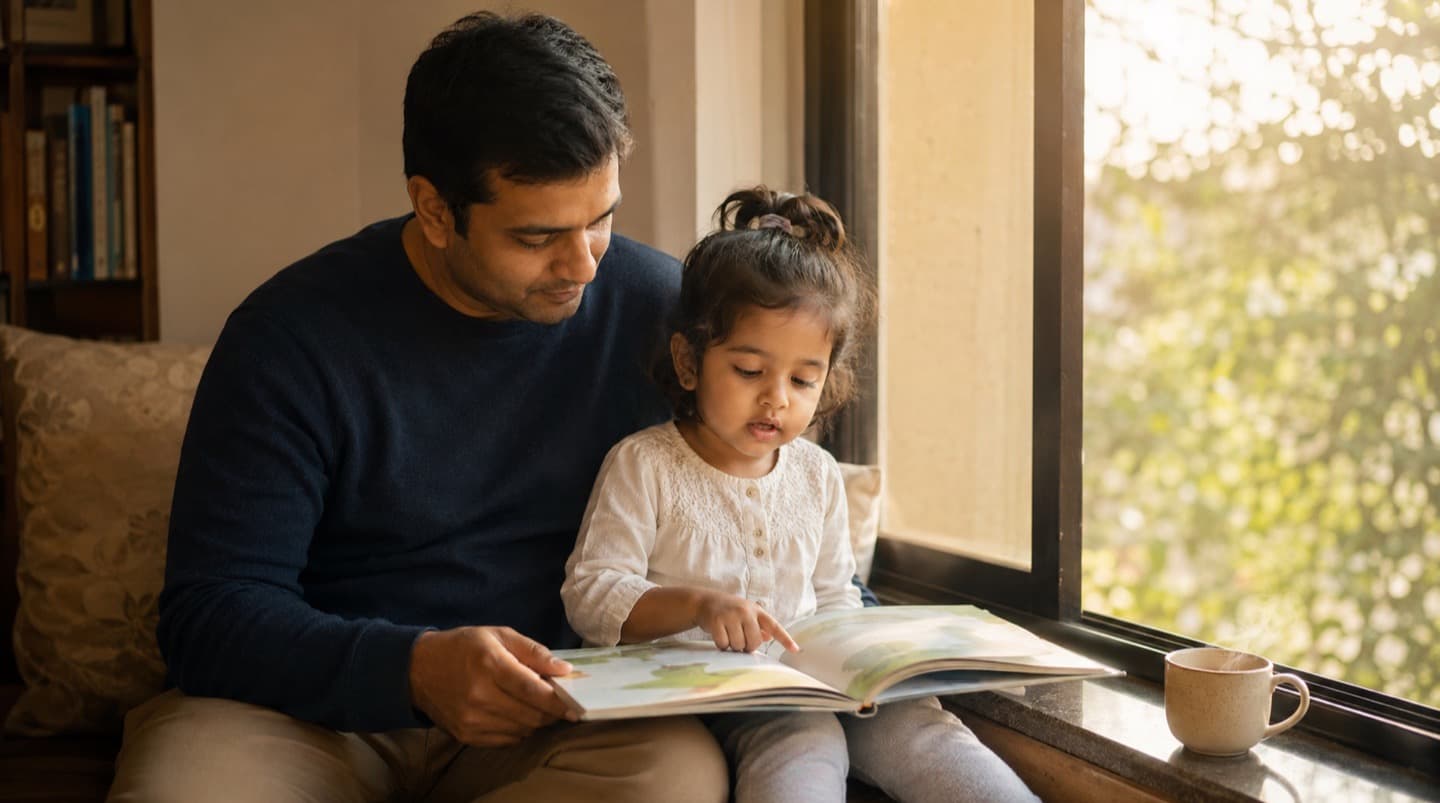
Whether your child is a late bloomer or just an economist with words, the home game is the same. Narrate your day out loud while you do it: the dal is boiling, now the pressure cooker, one whistle, two. Give choices instead of yes-no questions, because red cup or yellow cup demands a word. Read the same book the tenth time without sighing, since repetition is how words set.
Above all, respond to every attempt as if it were a sentence. A point, a sound, a half-word: answer it fully. Children speak more where speaking works.
One caution from us, and it applies to our own product too: no toy replaces a professional when one is needed, and no toy replaces you. Talking toys, songs, and story audio can add more chances to hear and answer language at home. Think of them as extra rounds of practice, never as the coach.

More reads like this on the journal, the mechanisms behind the promises on the Safety page, or meet the friend behind it on the Kheelu page.