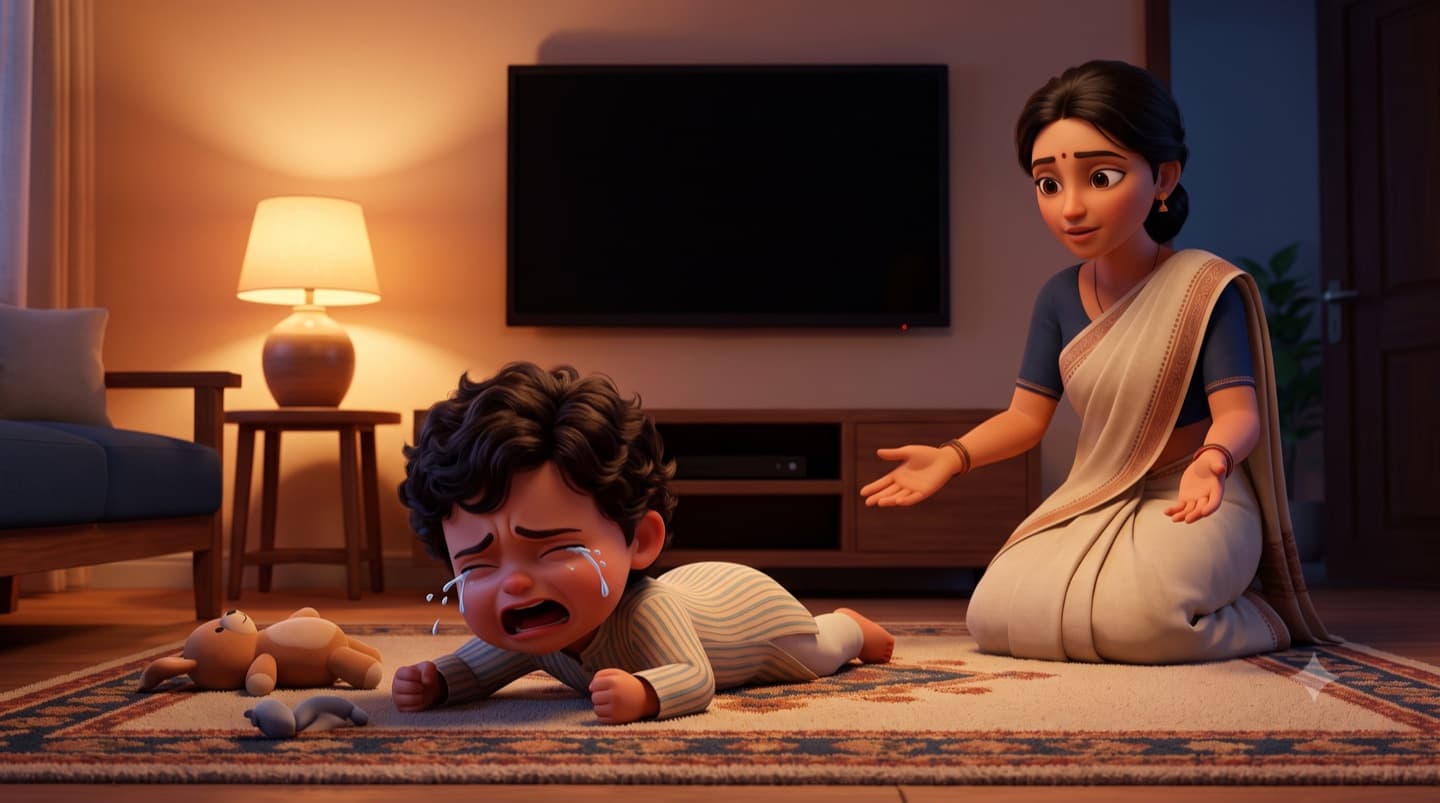
The video ends. You say that is enough for today. And a child who was silent for forty minutes becomes a small weather system on your living room floor.
If this is your house some evenings, it is most houses some evenings. The tantrum after the screen is so common it has its own research literature. Knowing the mechanics helps.
Why the meltdown comes at the off switch
Fast, bright, always-rewarding video sets a pace no living room can match. When it stops, everything real feels slow and dim by comparison, and a three year old does not have the brakes to manage that drop. The tantrum is not defiance. It is a small brain being asked to change gears at highway speed.
This is also why the second video is easier to grant than the first was. Each yes resets the peak, and the fall gets steeper.
Making the off switch boring
The trick that works is not a firmer no. It is a softer landing. End the screen at a natural break, not mid-episode. Announce the landing before takeoff: one episode, then we water the plants together. And give the hands somewhere to go the moment the screen goes dark, because empty hands go looking for the remote.
Notice the pattern in all three: the exit needs somewhere to arrive. Children leave screens easily for things that want them back.
A voice that listens is one of those things. It does not flash or score points. It just answers, and asks, and waits. Calm holds attention longer than parents expect, and it hands attention back gently. That idea is the reason our little talking friend exists, but it works with a grandparent on the phone too.

More reads like this on the journal, the mechanisms behind the promises on the Safety page, or meet the friend behind it on the Kheelu page.